
Accounting Fundamentals in Phagwara
Learn accounting basics, journal entries, ledgers, trial balances and financial statements with Accounting Fundamentals training at techcadd Phagwara.
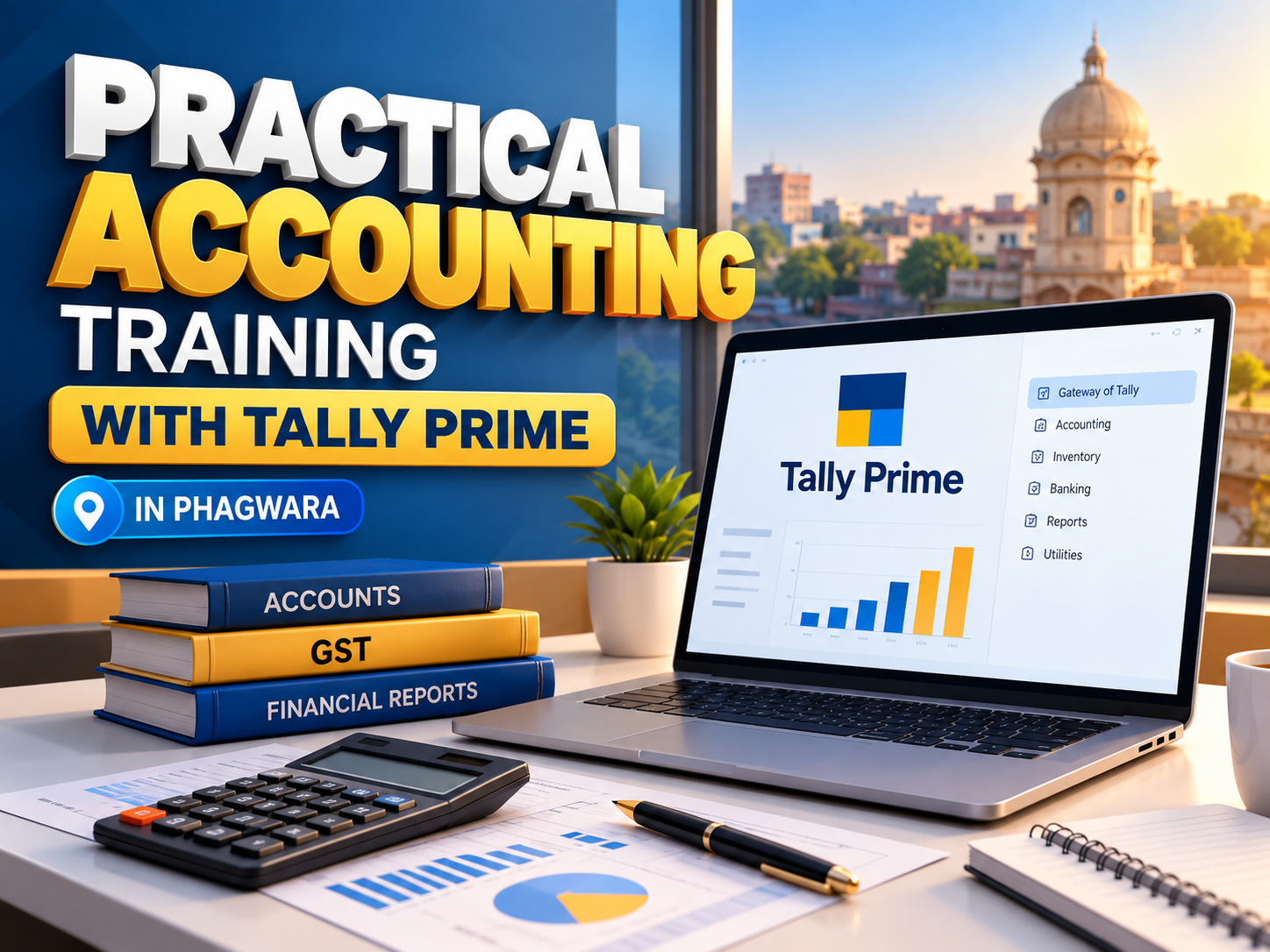
Accounting Fundamentals Training in Phagwara
Introduction to Accounting Fundamentals
Accounting is an essential part of every business, organization, and financial institution. It helps businesses record financial transactions, manage income and expenses, calculate profits and losses, and understand their overall financial position. A strong understanding of accounting fundamentals is useful for students, job seekers, business owners, and anyone interested in developing practical financial and accounting skills.
techcadd provides Accounting Fundamentals training in Phagwara to help learners understand the basic principles, concepts, and procedures used in accounting. The training introduces financial transactions, journal entries, ledger accounts, trial balances, financial statements, and other important accounting concepts through structured learning and practical examples.
Whether you are preparing for a career in accounting, studying commerce, planning to work in an office, or managing your own business, learning accounting fundamentals can help you understand how financial information is recorded, organized, and interpreted.
What Are Accounting Fundamentals?
Accounting fundamentals are the basic principles and practices used to record, classify, summarize, and report financial transactions. They form the foundation of bookkeeping, financial accounting, and business finance.
Accounting helps organizations maintain accurate financial records, monitor expenses, calculate revenue, identify profits or losses, and prepare financial reports. It also supports budgeting, financial planning, tax preparation, and business decision-making.
Learning the fundamentals of accounting helps beginners understand how everyday business transactions affect financial records and how accounting information is used to evaluate business performance.
What You Will Learn in Accounting Fundamentals Training
1. Introduction to Accounting
Understand the meaning, objectives, importance, and basic functions of accounting. Learn how accounting supports business operations, financial management, and decision-making. Explore the differences between accounting and bookkeeping and understand their roles in maintaining financial records.
2. Basic Accounting Principles and Concepts
Learn important accounting concepts, including the business entity concept, going concern concept, consistency, accrual basis, matching principle, and the dual aspect concept. Understand why accounting follows established principles to maintain reliable and consistent financial information.
3. Accounting Equation
Understand the fundamental accounting equation:
Assets = Liabilities + Capital
Learn how business transactions affect assets, liabilities, and owner's equity. Use practical examples to understand how the accounting equation maintains balance in financial records.
4. Types of Accounts and Golden Rules of Accounting
Learn about personal accounts, real accounts, and nominal accounts under the traditional classification system. Understand the golden rules of accounting and how they help determine which accounts should be debited and credited when recording transactions.
5. Debit and Credit
Develop a clear understanding of debit and credit entries in accounting. Learn how different transactions affect accounts and practise identifying the correct debit and credit sides for common business activities, including purchases, sales, payments, receipts, and expenses.
6. Journal Entries
Learn how to record financial transactions in the journal, the book of original entry. Understand journal formats, transaction dates, account names, debit and credit amounts, and narrations. Practise preparing journal entries for routine business transactions.
7. Ledger Accounts and Posting
Understand how transactions are transferred from journal entries to individual ledger accounts. Learn ledger formats, posting procedures, balancing accounts, and identifying account balances. Explore how ledger accounts help organize financial information by category.
8. Trial Balance
Learn how to prepare a trial balance using ledger balances. Understand the purpose of checking whether total debits equal total credits and how a trial balance helps identify certain accounting errors before preparing financial statements.
9. Cash Book and Subsidiary Books
Understand how cash and bank transactions are recorded in a cash book. Learn the basics of purchase books, sales books, purchase returns, sales returns, and other subsidiary books used to organize recurring transactions efficiently.
10. Bank Reconciliation Statement
Learn why the balance shown in a business cash book may differ from the balance shown in a bank statement. Understand common reasons for these differences, including outstanding cheques, deposits in transit, bank charges, and direct bank transactions. Practise preparing a basic bank reconciliation statement.
11. Depreciation and Fixed Assets
Understand the meaning of depreciation and why the cost of certain fixed assets is allocated over their useful lives. Learn the basic concepts behind the straight-line method and written-down value method, along with examples of depreciation calculations and asset recording.
12. Final Accounts and Financial Statements
Learn the purpose and basic preparation of a trading account, profit and loss account, and balance sheet. Understand how financial statements summarize business performance and financial position at the end of an accounting period.
13. Revenue, Expenses, Profit, and Loss
Understand the difference between revenue, expenses, assets, liabilities, capital, and drawings. Learn how to calculate gross profit and net profit using simple examples and understand how these figures help evaluate business performance.
14. Accounts Receivable and Accounts Payable
Learn how businesses record money owed by customers and money payable to suppliers. Understand the importance of tracking outstanding payments, maintaining customer and supplier records, and monitoring business cash flow.
15. Introduction to Computerized Accounting
Understand how accounting software helps businesses record transactions, maintain ledgers, manage invoices, and generate reports. Explore the basic role of computerized accounting systems and how accounting fundamentals support learning software such as Tally Prime, where included in the training.
Benefits of Learning Accounting Fundamentals
Accounting fundamentals provide a useful foundation for financial recordkeeping and business management. The major benefits include:
Understanding how business financial transactions are recorded.
Learning the basic principles of debit and credit.
Developing journal entry, ledger, and trial balance skills.
Understanding profit, loss, assets, liabilities, and capital.
Learning how to prepare and interpret basic financial statements.
Improving accuracy in bookkeeping and financial recordkeeping.
Building a foundation for computerized accounting and accounting software.
Preparing for further studies and entry-level accounting-related roles.
Understanding basic financial information used in everyday business decisions.
Who Should Join Accounting Fundamentals Training?
Accounting Fundamentals training is suitable for commerce students, school and college students, fresh graduates, job seekers, aspiring accountants, bookkeeping beginners, office assistants, entrepreneurs, and small business owners.
It is especially useful for people who want to learn accounting from the beginning and understand how financial transactions are recorded. Students preparing for further accounting studies can also benefit from learning the fundamental concepts before moving on to advanced accounting topics or computerized accounting software.
No advanced accounting knowledge is required to begin learning the basics.
Career Opportunities After Learning Accounting Fundamentals
Accounting knowledge is relevant across businesses, educational institutions, retail organizations, service companies, and many other industries. A foundation in accounting can support preparation for roles such as:
Accounts Assistant
Junior Accountant
Bookkeeping Assistant
Billing Executive
Accounts Clerk
Finance Assistant
Cashier or Billing Operator
Office Assistant with accounting responsibilities
The responsibilities and eligibility requirements for these positions vary by employer. Some roles may require additional qualifications, practical experience, knowledge of accounting software, taxation, GST, or advanced Excel.
Why Choose techcadd for Accounting Fundamentals Training in Phagwara?
techcadd aims to help learners develop practical computer and professional skills through structured training. Accounting Fundamentals training can help beginners understand accounting concepts through clear explanations, worked examples, and practice with common financial transactions.