
Basic Networking Fundamentals in Phagwara
Learn basic networking in Phagwara at Techcadd. Understand IP addressing, routers, switches, network protocols, troubleshooting, and security basics.
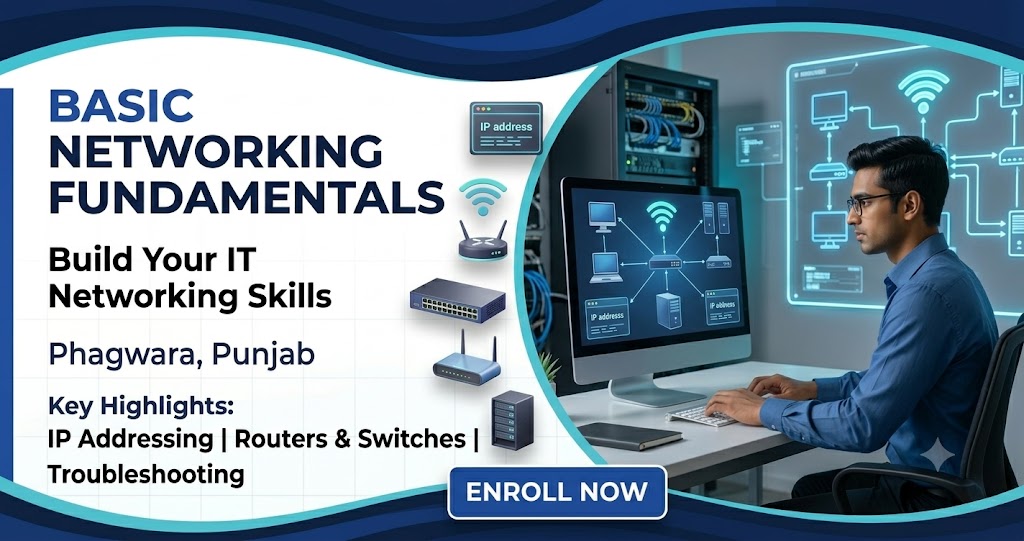
Basic Networking Fundamentals in Phagwara
Learn Basic Networking Fundamentals in Phagwara
Computer networking is an essential part of modern information technology. It allows computers, servers, printers, and other digital devices to communicate and share information through connected networks. If you are looking for Basic Networking Fundamentals training in Phagwara, learning the core concepts of networking can help you build a strong foundation for IT support, network administration, and cybersecurity studies.
At Techcadd, learners can explore the basic principles of computer networking and understand how devices communicate within homes, offices, educational institutions, and business environments. The training can help beginners develop the technical knowledge needed to understand network connections and troubleshoot common connectivity issues.
Why Learn Basic Networking Fundamentals?
Networking knowledge is useful in many IT-related roles because organizations depend on reliable connections to access files, communicate, share resources, and use online services. Understanding how networks operate can help learners recognize common technical problems and understand the systems that connect computers and devices.
A networking fundamentals course introduces important concepts such as network types, network devices, communication protocols, IP addressing, and network security basics. These concepts also provide a foundation for further learning in cybersecurity, cloud computing, and advanced networking.
What Will You Learn in Networking Training?
The course can introduce learners to Local Area Networks (LAN), Wide Area Networks (WAN), and Wireless Local Area Networks (WLAN). Students can understand how devices connect within a network and how information travels between connected systems.
Learners can also explore networking devices such as routers, switches, modems, wireless access points, and network interface cards. Understanding the purpose of each device helps students learn how network infrastructure is organized.
Additional topics may include IP addresses, subnet masks, MAC addresses, the Domain Name System (DNS), Dynamic Host Configuration Protocol (DHCP), and common communication protocols such as TCP/IP. These concepts help explain how devices identify one another and exchange information.
Understand Network Setup and Troubleshooting
Practical networking knowledge helps learners understand how to identify and resolve common connectivity problems. Training exercises can include checking network connections, understanding IP configuration, testing connectivity, and identifying basic Wi-Fi or local network issues.
Students may also learn how to use common troubleshooting commands such as ping, ipconfig, and tracer, depending on the course syllabus. These tools can help diagnose connection problems and provide useful information about network communication.
Introduction to Network Security
Network security focuses on protecting connected devices, systems, and information from unauthorized access and potential threats. Basic networking training can introduce learners to concepts such as strong passwords, firewalls, secure Wi-Fi configurations, software updates, and safe network practices.
Understanding these principles helps students recognize why security is important when managing home, office, and business networks. It also creates a useful starting point for those interested in studying cybersecurity.
Who Should Join a Basic Networking Course?
Basic networking training is suitable for students, beginners, IT enthusiasts, diploma learners, and job seekers who want to understand how computer networks work. It can also benefit individuals preparing for computer hardware support, technical support, and entry-level networking roles.
No advanced networking knowledge is required to begin learning the fundamentals. A basic understanding of computers can help learners follow the topics more comfortably.
Career Opportunities After Networking Fundamentals
Networking knowledge can support career paths such as IT support technician, help desk assistant, network support trainee, computer technician, and junior network administrator. Actual job requirements depend on the employer, practical experience, and additional qualifications.
Learners can continue developing their skills through advanced networking courses, cybersecurity training, or relevant industry certifications.
Start Learning Networking at Techcadd in Phagwara
If you want to understand how computer networks operate and build a foundation in IT infrastructure, explore Basic Networking Fundamentals training at Techcadd in Phagwara. Develop your understanding of network devices, IP addressing, connectivity, troubleshooting, and essential security concepts.
Build your technical knowledge step by step and prepare for further learning in networking and information technology.

Introduction to Computer Networking
Understand what computer networking is and how connected devices communicate and share information. Learn why networking is important in homes, offices, educational institutions, and businesses.
Types of Computer Networks
Explore LAN, WAN, and WLAN concepts. Understand the differences between local, wide-area, and wireless networks and how they are used in different environments.
Networking Devices and Their Functions
Learn about routers, switches, modems, network interface cards, and wireless access points. Understand how these devices help connect computers and manage network communication.
IP Addressing and Network Protocols
Discover the basics of IPv4, IP addresses, subnet masks, MAC addresses, DNS, DHCP, and TCP/IP. Learn how devices are identified and how data moves through a network.
Wired and Wireless Networking
Understand the differences between Ethernet connections and Wi-Fi networks. Learn about basic network setup, wireless connectivity, and the factors that affect network performance.
Network Configuration Basics
Explore fundamental network settings, including IP configuration, default gateways, DNS settings, and connectivity checks. Develop an understanding of how devices join and communicate across a network.
Network Troubleshooting Skills
Learn basic methods for diagnosing common network problems. Practice checking connections and using commands such as ping, ipconfig, and tracer to investigate connectivity issues.
Introduction to Network Security
Understand basic security practices, including firewall protection, secure Wi-Fi settings, strong passwords, and regular software updates. Learn why protecting network devices is important.
Practical Networking Exercises
Apply networking concepts through guided activities involving device connections, basic network configuration, and troubleshooting. Practical exercises help learners connect theoretical concepts with real-world situations.
Career Opportunities in Networking
Discover how networking fundamentals can support future learning and entry-level opportunities in IT support, computer maintenance, network support, and cybersecurity.