
Job Opportunities After Techcadd's Digital Marketing Course
Explore SEO, social media marketing, Google Ads,and analytics while learning about potential career paths after digital marketing training at Techcadd Phagwara.
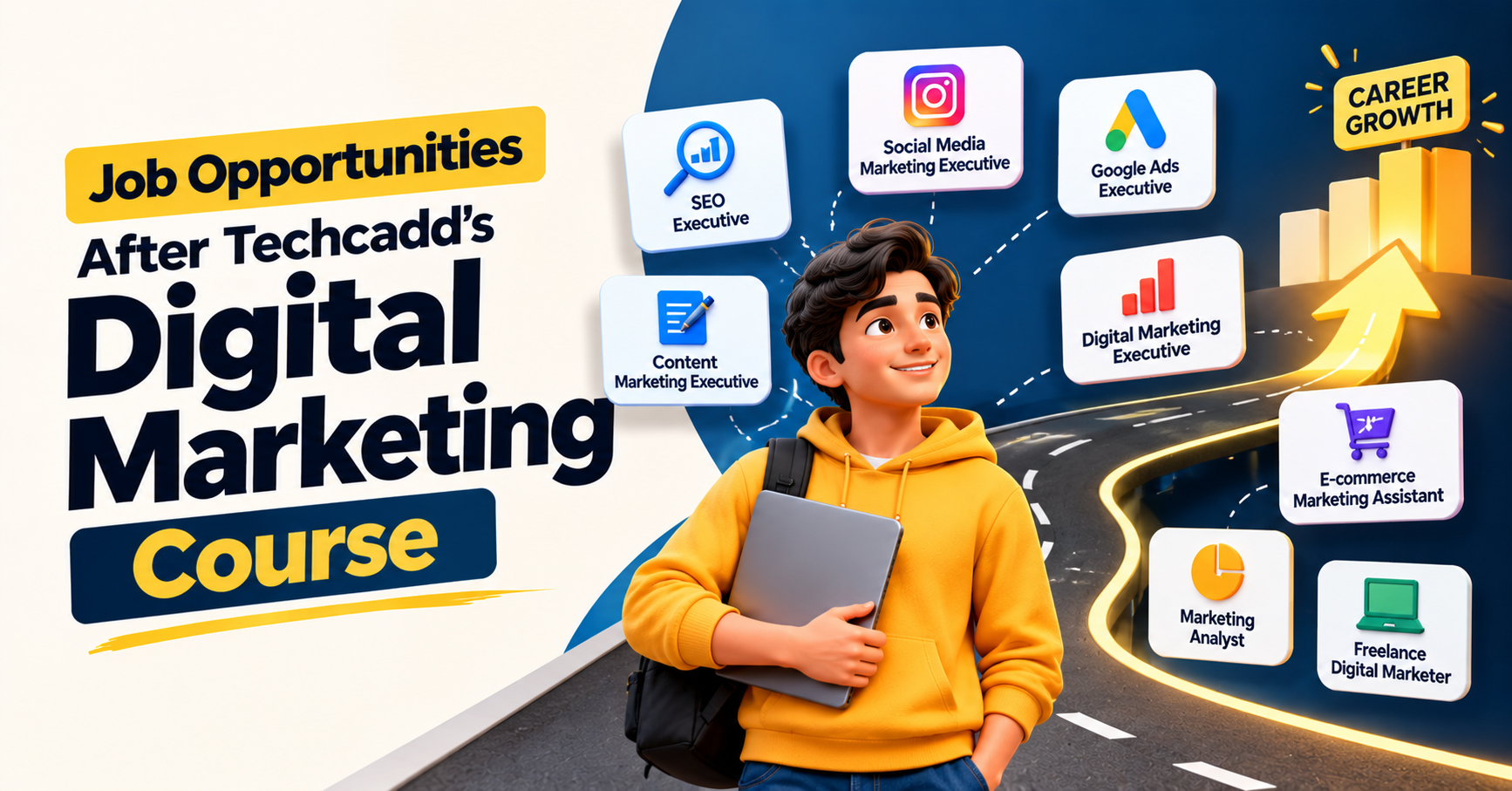
Job Opportunities After Techcadd's Digital Marketing Course
Digital marketing has become an important part of how businesses connect with customers, promote products and services, and build their online presence. From local shops and educational institutes to e-commerce brands and service-based companies, businesses use digital platforms to reach their target audiences. As a result, digital marketing skills can open up different career paths for students, freshers, and people looking to develop their professional skills.
If you are exploring digital marketing training in Phagwara, understanding the available job opportunities can help you decide which skills to learn and what career direction to consider. At Techcadd Phagwara, learners can explore digital marketing as a practical skill area and learn about the different responsibilities involved in online promotion. The exact topics covered depend on the current course syllabus, so students should confirm the available modules before enrolling.
What Is Digital Marketing?
Digital marketing refers to promoting a business, product, service, or brand through digital channels. These channels may include search engines, social media platforms, websites, email, online advertising, and other digital communication tools.
The field combines creativity, research, communication, and data analysis. For example, a marketer might research keywords to improve a website's search visibility, plan social media content, prepare advertising campaigns, write website copy, or review campaign performance using analytics tools.
Digital marketing includes several specialisations. Learning the fundamentals can help beginners understand which area suits their interests, strengths, and long-term goals.
1. Digital Marketing Executive
A Digital Marketing Executive helps plan and manage online marketing activities for a company or client. Depending on the organisation, the role may involve website updates, social media coordination, content planning, basic SEO tasks, campaign support, and performance reporting.
Typical responsibilities may include:
Assisting with digital marketing plans and campaign schedules.
Coordinating content for websites and social media.
Supporting search engine optimisation activities.
Helping manage online advertising campaigns.
Reviewing basic engagement and website performance data.
Preparing reports for the marketing team.
This role can be worth exploring for beginners who enjoy working across different digital marketing channels. Employers may look for communication skills, familiarity with digital platforms, attention to detail, and the ability to learn new tools.
2. SEO Executive
Search Engine Optimisation, commonly known as SEO, focuses on improving a website's visibility in organic search results. SEO professionals work on making website pages relevant, useful, accessible, and easier for search engines to understand.
An SEO Executive may conduct keyword research, optimise page titles and meta descriptions, improve website content, review internal links, monitor keyword performance, and help identify technical website issues.
Important skills for this career path include:
Keyword research and search intent analysis.
On-page SEO and content optimisation.
Basic technical SEO concepts.
Website structure and internal linking.
Search performance analysis.
Understanding organic traffic and search visibility.
SEO can suit people who enjoy research, writing, problem-solving, and analysing how people search online. It is also relevant to businesses that want to attract customers through local searches and location-based queries.
3. Social Media Marketing Executive
Social media marketing involves using platforms such as Instagram, Facebook, LinkedIn, and other relevant channels to communicate with audiences and promote a brand.
A Social Media Marketing Executive may plan monthly content calendars, write captions, coordinate creative designs, schedule posts, review engagement, and help maintain a consistent brand voice. Some roles also involve responding to comments, researching trends, and supporting paid social campaigns.
Useful skills include content planning, copywriting, audience research, creative thinking, platform knowledge, and performance tracking.
This career path may appeal to people who enjoy visual content, communication, trends, and understanding what makes audiences interact with a brand. Knowledge of design tools or short-form video editing can also be useful, depending on the job.
4. Google Ads or PPC Executive
Paid advertising professionals help businesses promote their products and services through online advertising platforms. PPC stands for pay-per-click, a common advertising model in which advertisers may pay when someone clicks an ad.
A Google Ads or PPC Executive may help with keyword selection, campaign setup, audience targeting, ad copy, budget monitoring, conversion tracking, and performance reports. The responsibilities depend on the company's campaign structure and the employee's experience level.
Skills relevant to this role include:
Keyword and audience research.
Writing clear advertising copy.
Understanding campaign objectives and budgets.
Monitoring clicks, impressions, and conversions.
Learning conversion tracking and analytics.
Identifying opportunities to improve campaign performance.
This role may suit people who enjoy combining marketing ideas with numbers and measurable results. Paid advertising requires careful budget management, testing, and ongoing learning rather than simply launching an advertisement and leaving it unchanged.
5. Content Marketing Executive
Content marketing focuses on creating and distributing useful, relevant content to attract and inform a target audience. Content may include blog posts, website pages, social media posts, email newsletters, short videos, and other educational or promotional materials.
A Content Marketing Executive may research topics, prepare content calendars, write drafts, coordinate with designers, optimise content for search, and review how audiences respond.
Helpful skills include writing, editing, research, storytelling, audience understanding, and basic SEO. Familiarity with content management systems and digital publishing tools may also be beneficial.
This career option is worth considering if you enjoy explaining ideas, writing in different formats, researching topics, or developing content that supports a business's marketing goals.
6. Digital Marketing Analyst or Marketing Analyst Trainee
Marketing analytics involves examining campaign and website data to understand how marketing activities perform. Depending on the role, an analyst may work with website visits, traffic sources, audience behaviour, engagement, leads, and advertising results.
Entry-level responsibilities may include preparing reports, checking campaign metrics, organising data, identifying patterns, and helping the team understand which activities are performing well.
Skills that can support this path include spreadsheet knowledge, analytical thinking, basic statistics, data visualisation, and familiarity with tools such as Google Analytics or advertising dashboards.
Some analyst roles require additional technical or quantitative skills, so learners should review individual job descriptions before choosing this specialisation.
7. Email Marketing Executive
Email marketing helps businesses communicate with subscribers, customers, and potential clients through relevant email messages. These messages may include product updates, newsletters, event announcements, offers, and follow-up communication.
An Email Marketing Executive may help organise subscriber lists, prepare email copy, build campaign layouts, schedule messages, and review open rates, clicks, and conversions. More advanced roles may include audience segmentation, automation, and campaign testing.
Good writing, attention to detail, audience understanding, and basic data analysis can be useful in this field. Marketers must also follow applicable privacy rules and obtain appropriate consent for marketing communications.
8. Local SEO and Online Presence Specialist
Local SEO helps businesses become more visible to people searching for services in a particular area. It can be especially relevant for educational institutes, clinics, restaurants, retailers, and other businesses that serve a local audience.
A person working in this area may help optimise a business's online information, maintain consistent contact details, improve website location pages, review local search performance, and support reputation management.
For example, a business serving customers in Phagwara may want to appear for relevant searches connected with its services and location. Local SEO work focuses on helping search engines and potential customers understand where a business operates and what it offers.
This path may suit learners interested in local businesses, search visibility, website content, and online reputation management.
9. E-commerce Marketing Assistant
E-commerce marketing supports businesses that sell products or services online. The work may involve product page optimisation, promotional campaigns, email marketing, social media content, paid advertisements, and reviewing online store performance.
Depending on the employer, an entry-level assistant may help upload product information, prepare promotional content, coordinate offers, check website links, or organise campaign reports.
Useful skills include content writing, basic SEO, social media marketing, online advertising fundamentals, spreadsheet use, and an understanding of the customer journey.
People interested in online shopping, product promotion, and digital business models may wish to explore this area.
10. Freelance Digital Marketer
Freelancing is another possible direction for people who develop useful digital marketing skills and can demonstrate their work. Freelancers may offer services such as SEO support, social media content planning, website copywriting, local SEO, or campaign assistance.
However, freelancing involves more than technical knowledge. It also requires communication, project planning, client management, pricing, deadlines, and the ability to explain the value of the work.
Beginners can start by practising on sample briefs, building a portfolio with clearly labelled practice projects, and learning how to measure results. Any real client work should be described accurately, and confidential business information should not be shared without permission.
Freelance income is not guaranteed and may vary according to experience, specialisation, demand, client relationships, and the quality of work delivered.
Skills to Develop for Digital Marketing Jobs
A course can introduce the concepts, but career preparation also involves practising and improving skills over time. Depending on the role you want to pursue, consider developing the following:
Search engine optimisation: Learn keyword research, on-page optimisation, website structure, search intent, and content quality.
Social media management: Practise content planning, caption writing, creative briefs, audience research, and performance review.
Paid advertising: Understand campaign objectives, targeting, budgets, ad copy, and conversion tracking before managing live campaigns independently.
Content creation: Build your ability to research, write, edit, and adapt messages for different audiences and platforms.
Analytics and reporting: Learn to interpret basic metrics, use spreadsheets, compare results, and explain findings clearly.
Communication and teamwork: Marketing professionals often coordinate with designers, developers, sales teams, business owners, and clients.
Adaptability: Digital platforms and tools change frequently. A willingness to practise, learn, and update your knowledge is important throughout your career.
How to Build a Portfolio After Digital Marketing Training
A portfolio helps you demonstrate what you can do, particularly when you have limited professional experience. It does not need to contain real client campaigns to be useful. You can create sample projects and clearly identify them as practice work.
Here are a few portfolio ideas:
SEO sample: Select a sample business and prepare keyword research, a page title, meta description, heading structure, and on-page optimisation suggestions.
Social media plan: Create a two-week content calendar with post ideas, captions, creative directions, and objectives.
Content writing sample: Write a useful blog article and demonstrate how you would organise headings, internal links, and relevant keywords.
Advertising concept: Develop a sample campaign brief with a target audience, objective, proposed ad copy, and budget considerations. Do not present it as a live campaign if it was never launched.
Analytics report: Use sample or permitted data to prepare a simple report showing traffic, engagement, leads, or campaign performance.
These exercises can help you explain your thought process during interviews and identify areas where you need more practice.
What Should You Check Before Joining a Digital Marketing Course at Techcadd Phagwara?
Before enrolling, review the course syllabus and ask how the training addresses the roles that interest you. A useful checklist includes:
Which modules are included: SEO, social media, Google Ads, content marketing, analytics, or other topics?
Are practical assignments included, and what will students be expected to complete?
Which tools and platforms are covered?
Are live campaigns, sample projects, or case studies part of the syllabus?
What is the course duration, fee, batch schedule, and assessment method?
Is a certificate offered, and what are its requirements?
Is career guidance or interview preparation available, if needed?
Confirm these details directly with Techcadd Phagwara, as course features, schedules, and available support can change. Choose a course based on the actual syllabus and your learning goals rather than relying only on a course title.
Is Digital Marketing a Good Career Option After 12th or Graduation?
Digital marketing may be a useful career area for students after Class 12, graduates, freshers, and professionals who want to develop online marketing skills. The right entry route depends on your education, interests, current abilities, and the requirements of the employers you plan to approach.
You do not necessarily need to master every specialisation at once. Beginners can start with the fundamentals, explore a few areas, and then focus on the work they enjoy most. For example, someone who likes writing may prefer content marketing, while someone who enjoys data and experimentation may explore paid advertising or analytics.
Employers can consider a combination of education, practical ability, communication, portfolio quality, and role-specific knowledge. Completing a course alone does not guarantee employment, a particular salary, or immediate freelance clients.
Start Exploring Digital Marketing at Techcadd Phagwara
Understanding job opportunities can help you connect your learning plan with a realistic career goal. From SEO and social media to paid advertising, content marketing, analytics, and e-commerce, digital marketing offers several areas to explore. Each path requires its own combination of skills and continued practice.
If you are considering digital marketing training in Phagwara, contact Techcadd to ask about the current syllabus, practical learning activities, course duration, fees, and available guidance. Compare the information with your goals and choose the learning path that best fits your interests.
Ready to explore digital marketing? Get in touch with Techcadd Phagwara for current course details and information about enrolment.
Turn Digital Marketing Skills Into Career Opportunities
Explore SEO, social media marketing, Google Ads, content creation and analytics while learning about potential career paths after digital marketing training at Techcadd Phagwara.